Helical Anchors & Tiebacks2026-11-05T15:59:12-06:00

Commercial Helical Anchors & Tiebacks in Sioux Falls

Helical anchors and tiebacks offer engineered lateral support for commercial walls, excavations and buildings throughout Sioux Falls.

What Are Commercial Helical Anchors & Tiebacks?

Helical anchors and tiebacks are steel shafts fitted with helix-shaped plates that are advanced into stable soil beyond the area of movement. They attach to a wall or structure to provide lateral support and help prevent further movement.

Unlike helical piers, which carry structures from below, helical tiebacks are generally installed at an angle to resist lateral forces. The helix plates move those forces into stable soil, providing support without grout or cure time.

When Sioux Falls Commercial Projects Need Helical Tiebacks

Helical tiebacks can stabilize retaining walls, commercial foundation walls and other structures showing signs of leaning, rotation, sliding or bulging. Movement may also show up as horizontal wall cracks or changes in pavement and loading areas behind the wall.

They can also deliver lateral support for planned commercial projects, including excavation shoring, soldier pile and lagging systems, seawalls and bulkheads, and tiedown applications where uplift or overturning forces must be resisted.

Our Commercial Helical Anchor & Tieback Solutions Blackburn Foundation Repair

  • Retaining Walls That Are Leaning, Cracking or Overturning

    Permanent Helical Wall Tiebacks

    Permanent helical tiebacks provide lateral restraint for retaining walls, foundation walls, sheet pile walls, seawalls and other structures showing lateral movement. Installed through or behind the wall and advanced into competent soil beyond the failure plane, the anchors carry lateral loads into stable soil to help stabilize the structure and resist further movement.

    • Installed with relatively compact equipment for projects with limited access
    • Develop capacity through helix plates seated in competent soil
    • Installation torque gives an indication of soil resistance and anchor capacity
    • No grout or cure time required before loading the anchor
    • Can be integrated into retaining wall and other permanent stabilization systems
    • Available in configurations matched to project loads and soil conditions
  • Excavations That Need Lateral Support Next to Existing Structures

    Temporary Helical Shoring Tiebacks

    Temporary helical tiebacks offer lateral support for excavation and shoring systems where the surrounding soil must be restrained during construction. They work with soldier pile and lagging, sheet pile and other earth retention systems, including work near existing buildings where excavation movement and available working space are key considerations.

    • Delivers temporary lateral restraint for excavation support systems
    • Installs without grouting or waiting for grout to cure
    • Can be loaded immediately following installation and verification
    • Well suited for congested sites and limited-access construction areas
    • Installation torque can be monitored as the anchor advances
    • Can be set up for the loads, soils and geometry of the shoring system
  • Structures Resisting Uplift, Overturning or Lateral Thrust

    Helical Tiedowns & Tension Anchors

    Helical tiedowns and tension anchors secure structures against forces that can pull, overturn or move them from their designed position. Advanced into load-bearing soil, these anchors can deliver tension resistance for new construction and other commercial applications where foundations or structural members must resist uplift, overturning or lateral forces.

    • Built to resist tension, uplift and overturning forces
    • Helix plates move loads into suitable bearing soils
    • Installs without large excavations or concrete anchor blocks
    • No grout or cure time required
    • Installation torque can be monitored to help confirm capacity
    • Offered in shaft and helix configurations for varying loads and soil conditions

<div class="p-t-default">

<div class="p-b-none">

How Commercial Helical Tiebacks Are Designed & Installed

Helical Tiebacks vs. Grouted Tiebacks & Soil Nails

Helical tiebacks install without grout or cure time, call for minimal excavation and can be loaded right after installation. Installation torque is monitored as each anchor goes in to help verify it meets project requirements.

Grouted tiebacks depend on grout to secure the anchor in the ground and may be a better fit for certain high-load or rock conditions.

Soil nails work differently, strengthening the soil behind a wall or excavation rather than anchoring the wall itself.

The right earth retention system comes down to the loads involved, soil conditions, wall design, site access and other project requirements.

Commercial Helical Anchor & Tieback Installation You Can Trust in Sioux Falls

The right helical anchor or tieback system starts with understanding the loads, soil conditions, structure and project requirements. Blackburn Foundation Repair coordinates with the project team to determine the appropriate anchor configuration, layout and installation criteria for the application.

Contact Blackburn Foundation Repair to review your commercial helical anchor or tieback project in Sioux Falls and get a solution built around your structure, site conditions and project needs.

Don't just take our word for it

See what our customers have to say about our work.

Before & after photos

Check out before and after photos from some of our completed projects.

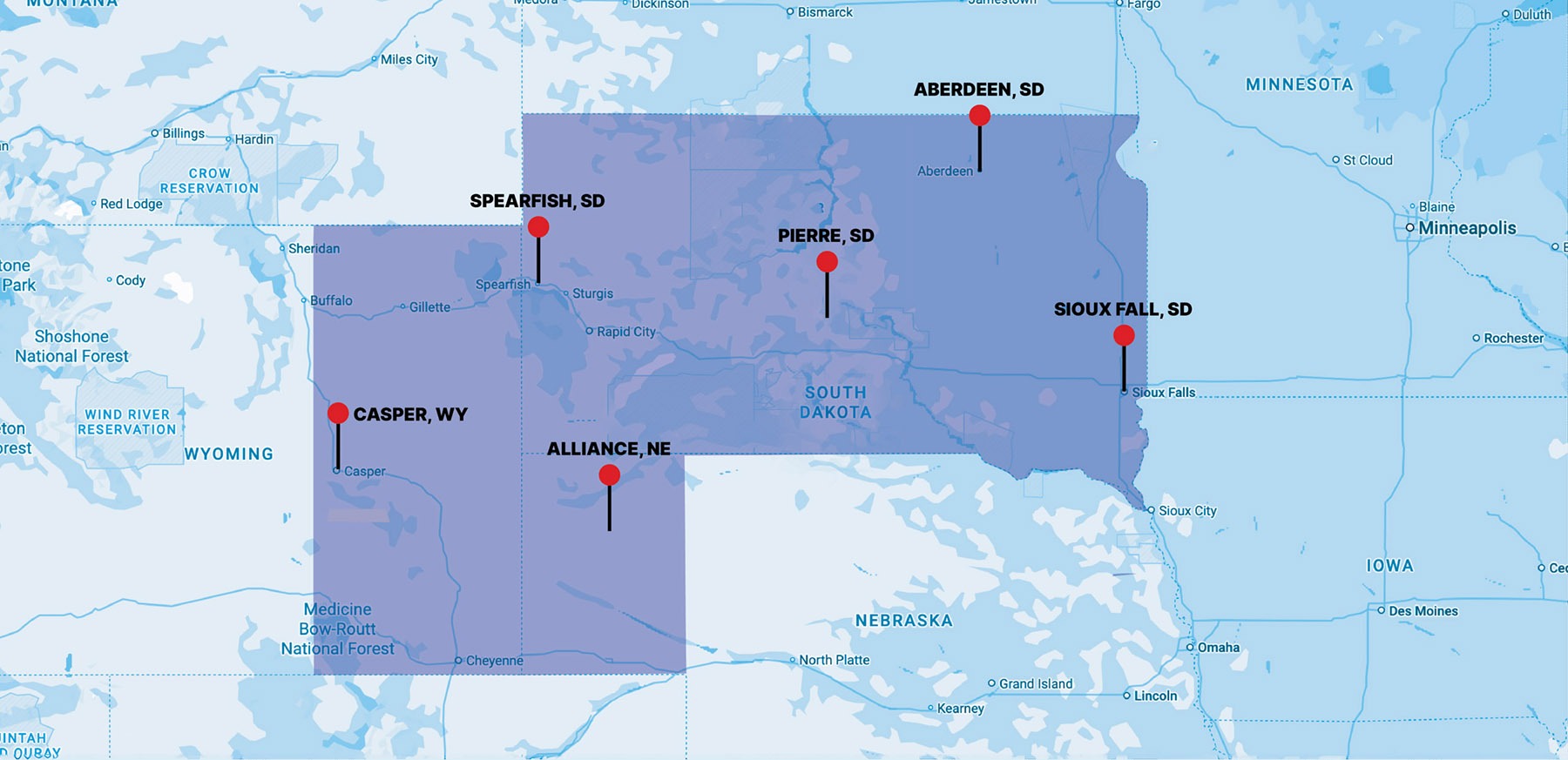
Blackburn Foundation Repair Service Area

Foundation, Basement, Crawl Space, Concrete and Radon Services Across South Dakota, Nebraska and Wyoming

Commercial Helical Anchors & Tiebacks FAQs

What determines the cost of a commercial helical tieback project in Sioux Falls?2026-10-06T10:48:44-05:00

Cost comes down to the number and capacity of the anchors, installation depth, soil conditions, site access, wall or shoring configuration, connection requirements, testing and other project-specific details. Contact Blackburn Foundation Repair to review your project and the scope required for your site. 

Are helical anchors and tiebacks code-compliant?2026-10-06T10:48:06-05:00

Helical anchor systems can be designed and specified to meet applicable building codes and project requirements. The requirements for a particular project depend on the application, jurisdiction, design and specified system. Blackburn Foundation Repair coordinates with the project team to determine the appropriate system and installation requirements. 

Can helical anchors be installed on limited-access or still-operating commercial sites in Sioux Falls?2026-10-06T10:47:31-05:00

Often, yes. Helical anchors can be installed using relatively compact equipment and typically generate minimal vibration and spoils, which makes them well suited for many limited-access and occupied commercial sites. Actual access requirements and impacts to operations depend on the project and where the anchors are installed. 

Do helical tiebacks require grout or curing time? 2026-10-06T10:46:22-05:00

Usually, no. Helical tiebacks develop capacity through helix plates advanced into the soil instead of relying on a grouted bond zone. With no grout to cure, the anchors can typically be loaded right after installation. 

How deep are helical tiebacks installed, and how far apart? 2026-10-06T10:44:30-05:00

There’s no standard depth or spacing for every project. Helical tiebacks need to extend past the anticipated failure plane and into suitable bearing soil. Their length, angle and spacing are set by factors such as soil conditions, wall geometry, loading and required anchor capacity. 

How much load can a commercial helical tieback hold? 2026-10-06T10:43:42-05:00

Tieback capacity varies based on the anchor configuration, soil conditions, installation depth and project criteria. Commercial helical tiebacks are chosen for the required design load, and installation torque is monitored while the anchor advances to help confirm that installation requirements are being met. 

How do helical tiebacks stabilize a failing retaining wall?2026-10-06T10:42:51-05:00

Helical tiebacks are installed through or behind the retaining wall and advanced beyond the unstable soil into competent soil. Once tied into the wall, the anchors transfer lateral loads into the surrounding soil to help stabilize the wall and resist further leaning, sliding or overturning. 

What is the difference between a helical anchor and a helical tieback?2026-10-06T10:41:51-05:00

A helical anchor is a general term for a steel anchoring system with helix-shaped bearing plates that transfer loads into the surrounding soil. A helical tieback is one kind of helical anchor, typically installed at an angle and connected to a wall or earth retention system to resist lateral forces.

Related pages

Service Areas

Blackburn has locations throughout South Dakota, Wyoming and Nebraska.

Resources

Access valuable resources to help keep your home healthy and your family safe.

The Thrasher Promise

At Thrasher, we pride ourselves on providing permanent solutions, and stand behind our work with industry-leading, fully transferable warranties and guarantees.

Schedule your free inspection today

Don’t let unanswered questions about your
home worry you any longer.
Go to Top